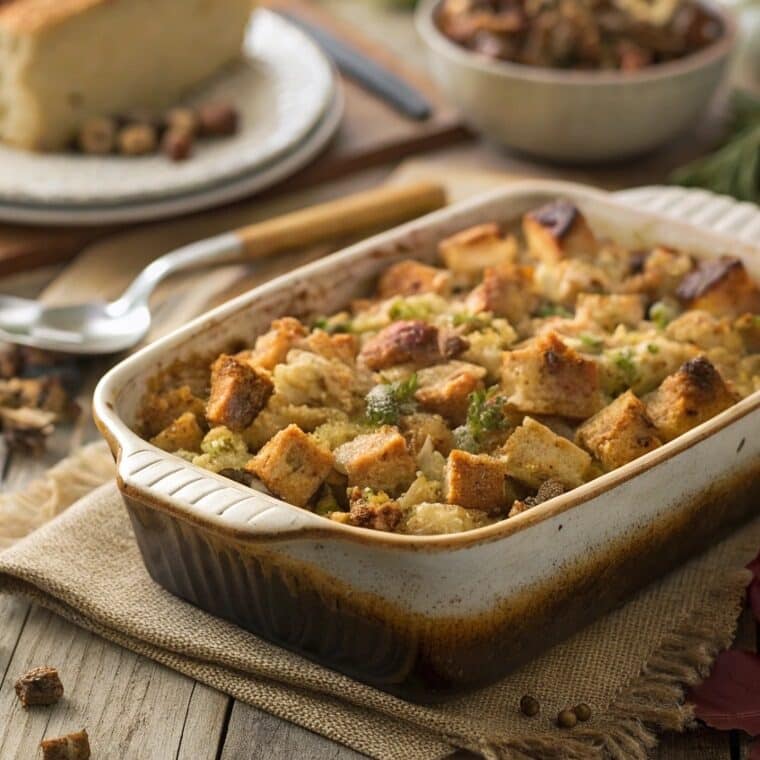
When the leaves begin to turn and the afternoon light looks like warm honey, kitchens all over the world start to smell like butter, toasted bread, and garden herbs. That scent is the quiet promise of stuffing recipes, a dish that carries history and home in every bite. Whether you are planning a grand feast with thanksgiving recipes side dishes or simply bringing fall potluck dishes to share with friends, stuffing deserves a proud place on the menu. It is satisfying, endlessly customizable, and surprisingly simple once you understand a few friendly fundamentals. By the end of this guide you will be ready to make an easy stuffing recipe that works for weeknights and for big celebrations, plus playful variations that add personality to the plate.
What Makes Great Stuffing
Great stuffing starts with three pillars. First is bread or an alternative base that can absorb flavor without turning into paste. Second is aromatics and herbs that carry the savory soul of the dish. Third is moisture management so each cube feels plush inside with a lightly crisp top. If you master these pillars, every version will taste like comfort.
Bread And Texture
Bread is the canvas. Choose a loaf with character so the cubes can hold their shape. Country white gives a classic softness. Sourdough adds gentle tang and a sturdier edge. Cornbread brings a delicate crumb and light sweetness that pairs beautifully with roasted meats and orchard fruit. Whole wheat builds a heartier, almost nutty chew. Whatever you choose, dry it first. Stale bread works, or you can oven dry the cubes. Drying makes space inside each cube for butter and broth so flavor moves through the entire dish.
Aromatics And Herbs
Onion and celery are the traditional duo, but shallots and leeks create a silkier, sweeter base. A little carrot adds color and a gentle earthy tone. As for herbs, think about layers. Sage is warm and woodsy, thyme is fresh and green, rosemary is piney and bold, and parsley brings a bright finish. A touch of poultry seasoning or marjoram can echo the flavors around a roast turkey without shadowing the natural sweetness of the bread.
Moisture And Binding
Broth brings tenderness. Start conservative and add more as needed so the mixture feels evenly damp but never soupy. Eggs can help the cubes set softly, especially for a casserole style bake. Butter does more than add richness. It helps brown the top and carries herb aromas through the dish. Olive oil works well in dairy light versions and partners nicely with Mediterranean flavors.
The Classic Easy Stuffing Recipe
This is the kind of pan that disappears fast. It is simple enough for beginners and cozy enough to sit beside a holiday roast. It also happens to be friendly for fall potluck dishes since it travels well and reheats beautifully.
Ingredients
- One large rustic loaf or a mix of white and sourdough, cut in one inch cubes and dried
- Eight tablespoons unsalted butter
- One large onion, finely diced
- Three celery stalks, finely diced
- One leek, white and light green parts only, finely sliced and rinsed well
- Two garlic cloves, minced
- Two teaspoons rubbed sage
- One teaspoon dried thyme
- One teaspoon chopped fresh rosemary or a half teaspoon dried
- Half cup chopped fresh parsley
- Three to four cups warm chicken or turkey broth or vegetable broth for a meatless version
- Two large eggs lightly beaten
- One teaspoon fine salt plus more to taste
- Half teaspoon freshly ground black pepper
Instructions
- Heat the oven to three hundred and fifty degrees Fahrenheit. Butter a large casserole dish.
- In a wide skillet melt the butter over medium heat. Add onion, celery, and leek. Cook slowly until tender and translucent. Stir in garlic and cook just until fragrant.
- Sprinkle in sage, thyme, and rosemary. Warm the herbs in the fat for a minute to bloom their oils. Turn off the heat and stir in parsley.
- Place the dried bread cubes in a very large bowl. Pour the warm vegetable mixture over the cubes. Toss gently to coat.
- Begin adding warm broth, a cup at a time, tossing after each addition. The bread should look evenly moist with only a little liquid pooling at the bottom of the bowl. Taste a cube and add salt and pepper as needed.
- Stir in the beaten eggs. Transfer to the prepared dish and lightly pat the surface so the top is level without compressing the cubes.
- Cover with foil and bake for thirty minutes. Remove the foil and bake fifteen to twenty minutes more until the top is golden with crisp peaks and the interior is steamy and set.
- Rest for ten minutes before serving so the structure can settle and slices hold together.
This pan shines beside turkey, chicken, or roasted vegetables. It fits comfortably among thanksgiving recipes side dishes and leaves your kitchen smelling like a holiday memory.
Flavor Paths And Regional Inspirations
Stuffing has different accents depending on where the spoon travels. Let that variety inspire your own pan.
Southern Cornbread Charm
Use half cornbread and half country white or all cornbread if you like a tender, pudding like center. Fold in sautéed and crumbled breakfast sausage, chopped pecans, and a handful of scallions. A little buttermilk in place of part of the broth gives a gentle tang.
Coastal Oysters And Leeks
Fold in shucked oysters with their liquor along with extra leeks and a whisper of fresh dill. Use a mix of sourdough and white bread. The briny accent feels elegant and pairs with roasted fish as well as turkey.
Apple And Chestnut Harvest
Sauté diced tart apples and pre roasted chestnuts in butter until lightly golden. Add to the bowl with fresh sage and a few thyme leaves. The fruit adds subtle sweetness without turning the dish into dessert, while the chestnuts give buttery richness.
Green Chile And Corn
For a western sparkle, fold in chopped roasted green chiles, fire roasted corn, and cilantro. Swap part of the broth for a light vegetable stock scented with cumin. The result is lively yet still cozy.
Mushroom And Herb Garden
Sauté a medley of cremini and shiitake mushrooms until browned. Deglaze with a splash of broth to lift the savory bits. Add plenty of thyme and parsley for a deeply aromatic vegetarian pan that pleases everyone.
Make It Weeknight Friendly
Stuffing recipes are not only for holidays. Turn the concept into a quick bake that pairs with rotisserie chicken or a big salad. Use a bakery baguette, cube it, and toast while you soften aromatics. Keep a jar of dried herb blend near the stove so you can season without hunting through the spice cupboard. Once you know the moisture target, you can scale down for a small family or scale up for a crowd.
Another weeknight trick is to bake stuffing in muffin tins. Compact lightly, then bake until edges crisp. These personal size portions freeze well and make a clever base for poached eggs at brunch.
Holiday Strategy And Menu Pairings
A calm cook is a happy host. Plan ahead and your stuffing will reward you with both flavor and peace of mind.
Make Ahead Method
You can assemble the entire pan one day early. Keep it covered in the refrigerator. On the day of serving, drizzle with a bit more broth if the top feels dry, then bake according to the instructions. The rest helps flavors bloom and ensures even moisture. This approach is perfect when your oven is juggling many thanksgiving recipes side dishes at once.
Menu Harmony
If your table leans rich on the mains, balance with bright accents. Cranberry relish, a lemony green salad, and roasted Brussels sprouts with a splash of balsamic keep bites lively. If your roast is simple, choose a stuffing with bolder add ins like sausage and apple or mushroom medley for contrast. The result feels complete without clutter.
Potluck Success
For fall potluck dishes, choose a well bound version that holds its shape. Bake in a deep dish to keep the interior moist for the reheat. Bring a small container of warm broth to splash over the top before it goes back into the oven. Garnish with fresh parsley when it comes out so it looks as joyful as it tastes.
Cultural Notes And Cross Kitchen Ideas
Many cultures tuck flavorful fillings into vegetables, poultry, or pastry. That spirit links stuffing to a larger world of celebratory cooking. In Mediterranean kitchens you might find bread or rice with olives and herbs tucked into vegetables. In parts of the Middle East, spiced rice with nuts and dried fruit creates delightful savory sweetness. Italian cooks often use fine breadcrumbs mixed with garlic, parsley, and cheese to fill artichokes or peppers. Take that curious mindset and borrow ideas you love. After dinner, a small plate of italian desserts can close the evening with a smile. Tiramisu, almond cookies, or a simple olive oil cake will fit beautifully.
Nutrition And Ingredient Swaps
Stuffing can be cozy and thoughtful. A few small changes make it friendly for many diets without losing the comfort everyone craves.
- For a vegetarian version use vegetable broth and olive oil or plant based butter
- For a dairy light version use half olive oil and half butter or use olive oil entirely and rely on herbs for aroma
- For a gluten free version use your favorite gluten free loaf and dry it well or use cooked wild rice as the base with toasted pecans for crunch
- For a lighter approach add a mound of sautéed mushrooms or chopped kale to increase volume and texture so portions feel generous with fewer bread cubes
Troubleshooting And Pro Tips
Keep Bread Dry
If the bread is not dry enough, cubes will collapse and the texture will feel dense. Spread on sheet pans and toast lightly until edges feel firm. Cool before mixing so steam does not soften them again.
Season In Layers
Add a pinch of salt when sweating vegetables, then taste the mixture before it hits the bread. Taste again after the first addition of broth. Bread is like a sponge and will dull flavors, so a final pinch of salt right before the bake is often just right.
Build Aroma With Fat
Warm herbs in butter or olive oil before they touch the bread. This step opens their oils and moves their fragrance through the pan.
Aim For Even Moisture
When you scoop the mixture, it should clump softly. If dry pockets remain, sprinkle more warm broth and toss gently. If it looks soupy, add a handful of extra dry cubes and wait a minute while they absorb.
Create A Crisp Top
Bake covered first so the interior steams. Finish uncovered so tips brown and crunch. If the top is browning too fast, tent loosely with foil for the last minutes.
Three Signature Variations
Savory Sausage And Apple Stuffing
Brown one pound of fresh pork sausage and drain lightly. Fold in with a diced tart apple sautéed in a teaspoon of butter until just tender. Add a small handful of golden raisins and chopped parsley. Use half cornbread and half sourdough. The salty and sweet contrast tastes like a walk through an orchard on a cool day.
Wild Rice And Mushroom Pan
Cook two cups of wild rice blend until just tender. Mix with half the usual amount of bread cubes and a generous batch of browned mushrooms with thyme. Use vegetable broth and olive oil. The texture is hearty and the flavor is deep and woodsy.
Citrus Herb And Olive
Zest one lemon and one orange into the sautéed vegetables. Add chopped green olives, fresh oregano, and a few thin slices of fennel cooked until sweet. Finish with a squeeze of lemon juice after baking. This bright profile pairs with roasted chicken and a crisp salad, and it makes a lovely companion to other thanksgiving stuffing recipes on a large buffet.
Serving Ideas Beyond The Casserole Dish
Stuffing loves company. Here are playful ways to reinvent leftovers or to present the dish with flair.
- Spoon hot stuffing into halved roasted acorn squash and add a shower of parmesan
- Crisp leftover slices in a skillet and top with a runny egg for a breakfast that tastes like a holiday morning
- Use stuffing as a base for a pan sauce gravy bowl and nestle slices of roast chicken on top
- Stir small cubes of stuffing into a vegetable soup at the last minute for a rustic bread dumpling feel
Storage And Reheating
Cool leftovers quickly and store covered in the refrigerator for up to four days. For the freezer, wrap portions tightly and use within two months for best quality. Reheat gently covered at three hundred and twenty five degrees Fahrenheit until steamy throughout. If the pan seems dry, add a splash of warm broth before reheating. A quick two minute finish uncovered restores the crisp top.
Frequently Asked Questions
Can I stuff the bird
Food safety experts generally recommend baking stuffing separately so it reaches a safe internal temperature without overcooking the turkey. If you love the flavor exchange, place the casserole under the roasting rack during the last part of cooking so drippings can perfume the top. Keep an eye on moisture and add a spoon of broth if needed.
How do I scale the recipe
For a smaller household, halve all ingredients and bake in a smaller dish. For a crowd, double and bake in two separate pans so the interior cooks evenly and the top browns nicely on both.
What bread is best
Use quality bread you enjoy eating on its own. A mix of country white for tenderness and sourdough for structure creates the most reliable texture. Cornbread introduces sweetness and a pudding like interior. Dry thoroughly for any choice.
Can I make it without eggs
Yes. Skip the eggs and add a little more broth for moisture. The texture will be slightly looser but still sliceable if you let it rest ten minutes before serving.
How do I keep the top from getting too hard
Cover with foil for most of the bake. Uncover at the end for color. If edges feel too crisp when reheating, seal tightly with foil and add a small splash of broth so steam can soften the crust.
Final Thoughts
Stuffing is generous by nature. It welcomes stale bread and turns it into a celebration dish. It carries garden herbs through a warm fog of butter and broth. It sits comfortably beside turkey and ham and roasted vegetables and it also shines on an ordinary Wednesday with a simple salad. Bake the classic pan for a first try, then add your signature. Perhaps it is sausage and apple, or mushrooms and thyme, or a citrus and olive sparkle. Share it at your next gathering of fall potluck dishes. Pass the serving spoon with a smile. And if there is a little space left after dinner, treat everyone to a bite of italian desserts for a sweet and cheerful ending.
With a few smart habits and a little curiosity, your collection of stuffing recipes will become a loved part of every seasonal table. May your kitchen smell like butter and herbs, may your pans come back empty, and may the people around your table feel the warmth you baked into every bite. And if someone asks for your method, you can tell them it all began with an easy stuffing recipe that never lets you down.
Classic Cozy Stuffing
Equipment
- Skillet
- Casserole Dish
- Mixing bowl
Ingredients
Stuffing Ingredients
- 1 loaf rustic or sourdough bread (cut in 1-inch cubes and dried)
- 8 tbsp unsalted butter
- 1 large onion (finely diced)
- 3 celery stalks (finely diced)
- 1 leek (white and light green parts only, rinsed and sliced)
- 2 cloves garlic (minced)
- 2 tsp rubbed sage
- 1 tsp dried thyme
- 1 tsp fresh rosemary (chopped, or 1/2 tsp dried)
- 0.5 cup fresh parsley (chopped)
- 3 to 4 cups chicken or vegetable broth (warm)
- 2 large eggs (lightly beaten)
- 1 tsp fine salt (plus more to taste)
- 0.5 tsp black pepper (freshly ground)
Instructions
- Preheat oven to 350°F (175°C). Butter a large casserole dish.
- Melt butter in a wide skillet. Add onion, celery, and leek. Cook until tender. Stir in garlic and cook briefly.
- Add sage, thyme, and rosemary. Cook 1 more minute, then remove from heat and stir in parsley.
- Place bread cubes in a large bowl. Pour warm vegetables over and toss gently to coat.
- Add warm broth gradually, tossing between each addition until evenly moist. Season with salt and pepper to taste.
- Stir in beaten eggs. Transfer mixture to prepared dish and level the top gently.
- Cover with foil and bake for 30 minutes. Remove foil and bake 15–20 minutes more until golden on top and set inside.
- Let rest for 10 minutes before serving.
