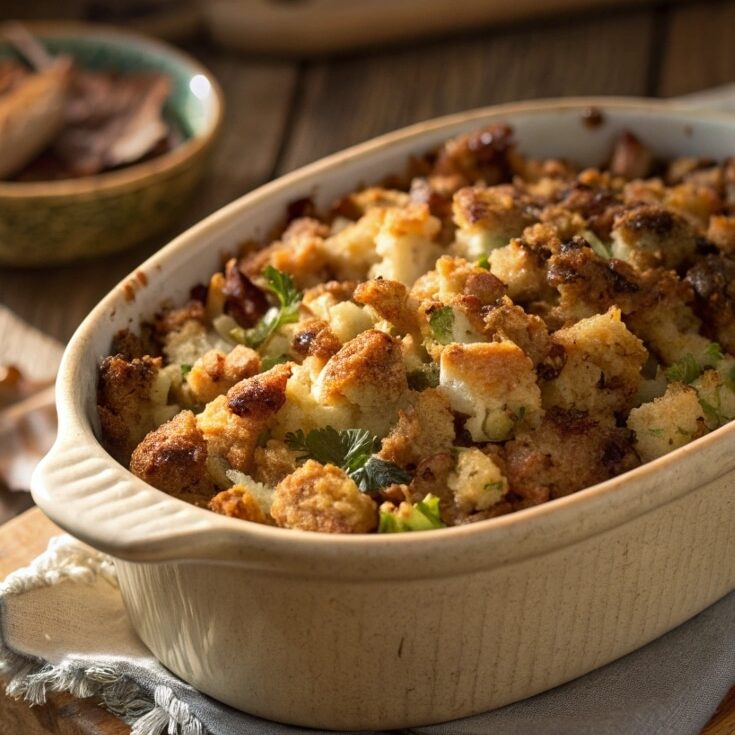
Stuffing is the kind of dish that makes a room feel warmer the moment it comes out of the oven. The aroma of sautéed onions and celery mingling with sage and thyme invites everyone to gather close while the top turns golden and crisp. It is the heart of many thanksgiving stuffing recipes and a staple on holiday tables that celebrate family, memory, and comfort. Whether you bake it in a casserole or serve it after roasting a bird, stuffing carries tradition in every bite and gives your plate a soft, savory anchor among the brighter sides.
This complete guide shows you how to build a truly homemade stuffing recipe that balances texture and flavor. You will learn which bread to choose, how to season thoughtfully, how much broth to add, and when to bake covered or uncovered. Along the way you will discover variations for every taste, from herb forward classics to cornbread versions with a touch of sweetness and hearty mushroom blends for vegetarian guests. If you are planning the ultimate menu of thanksgiving recipes side dishes, this is your friendly blueprint.
Why Stuffing Matters
Stuffing bridges the flavors on a holiday plate. Roast turkey brings savory depth, mashed potatoes feel creamy and mellow, cranberry sauce offers a tart lift. Stuffing ties everything together by carrying herbs, aromatics, and just enough richness to feel indulgent while still tasting light when baked correctly. It is that quiet hero that absorbs gravy beautifully and makes leftovers sing the next day.
- Comfort and nostalgia: many families pass down a preferred style that feels like home.
- Adaptable formula: bread, aromatics, herbs, and broth create a flexible canvas.
- Make ahead friendly: easy to assemble in advance, then bake when guests arrive.
- Pairs with everything: from turkey to roasted vegetables and seasonal salads.
Choosing the Best Bread
Bread is the backbone. It should be dry enough to soak up liquid without collapsing. Day old cubes or lightly toasted fresh cubes work well. Texture and flavor vary by style, so match the base to your menu.
- Country white or Italian: neutral flavor, sturdy crumb, classic diner style bite.
- Sourdough: gentle tang that complements rich gravy and turkey drippings.
- Cornbread: sweet, tender, and slightly crumbly. Lovely with sausage or pecans.
- Whole grain: hearty and nutty. Balances sweeter sides like glazed carrots.
- Gluten free loaves: dry the cubes thoroughly and bind with egg for structure.
Aim for cubes that are about three quarters of an inch. Smaller cubes saturate faster and can get too soft. Larger cubes hold their structure and create a delightful contrast between crispy edges on top and custardy pockets within.
Herbs and Aromatics That Define Flavor
Most beloved thanksgiving stuffing recipes start with onions and celery gently sweated in butter. Add carrots if you appreciate a touch of sweetness. For herbs, work with sage, thyme, and rosemary, then finish with parsley for freshness. Pepper should be freshly cracked. Salt should be added in layers to keep the profile balanced.
- Sage: the signature note that whispers holiday comfort.
- Thyme: delicate backbone that supports both poultry and vegetables.
- Rosemary: pine like and bold. Use sparingly for a bright finish.
- Parsley: freshness that keeps richness in check.
- Optional accents: a pinch of nutmeg, a touch of marjoram, or minced garlic.
The Liquid Factor
Broth delivers moisture and carries flavor into the bread. Chicken broth is classic. Vegetable broth works for a plant forward table. Warm the broth before adding so it disperses evenly. Add in stages while gently tossing. You want the cubes hydrated but not drowning. When pressed between fingers, a cube should feel moist and springy rather than soggy.
Eggs are optional. They provide extra binding and a custard like feel in the middle. Many home cooks love the richer texture. Others prefer a looser, bread pudding like interior that relies on starch alone. Either approach can be correct. Choose based on the texture you love.
Master Recipe: Classic Herb Stuffing
Classic Herb Stuffing
Servings 10 to 12
Prep Time 25 minutes
Cook Time 45 to 55 minutes
Total Time 1 hour 15 minutes to 1 hour 25 minutes
Calories about 260 per serving, depending on bread and broth
Ingredients
- 12 cups bread cubes, day old or lightly toasted
- 1 cup unsalted butter
- 2 cups finely diced yellow onion
- 2 cups finely diced celery
- 1 cup finely diced carrot
- 2 tablespoons chopped fresh sage, or 2 teaspoons dried
- 1 tablespoon chopped fresh thyme, or 1 teaspoon dried
- 1 teaspoon finely chopped fresh rosemary, or a scant half teaspoon dried
- 1 teaspoon kosher salt, more to taste
- 1 teaspoon freshly ground black pepper
- 3 to 4 cups warm chicken or vegetable broth
- 2 large eggs, lightly beaten, optional
- 2 tablespoons chopped fresh parsley for finishing
Instructions
- Heat oven to 175°C. Butter a deep 9 by 13 inch baking dish.
- Spread bread cubes on a sheet pan and toast for 8 to 10 minutes if not already dry. Cool slightly and place in a large bowl.
- Melt butter in a large skillet over medium heat. Add onion, celery, and carrot. Cook until tender and fragrant, about 10 minutes. Stir in sage, thyme, rosemary, salt, and pepper. Cook one more minute.
- Scrape the warm vegetables over the bread. Toss gently to distribute.
- Pour in warm broth a cup at a time, tossing between additions. Stop when the mixture feels evenly moist and holds together when pressed. If using eggs, stir them in now.
- Transfer to the baking dish. Cover with foil and bake for 30 minutes. Remove foil and bake until the top is crisp and golden, 15 to 25 minutes more. Sprinkle parsley over the top before serving.
This is an easy stuffing recipe that welcomes tweaks. You can fold in sautéed mushrooms, browned sausage, toasted nuts, or diced apples without disturbing the base method. The key is to keep moisture balanced and to bake in two stages so the inside stays soft while the top gains a satisfying crust.
Flavor Variations To Try
Cornbread and Sage Stuffing
Replace half or all of the bread cubes with cornbread cubes. Add a pinch more thyme and fold in chopped scallions. The natural sweetness of corn pairs well with turkey and gravy and feels at home among thanksgiving recipes side dishes.
Sausage, Fennel, and Apple Stuffing
Brown bulk Italian sausage until caramelized. Sauté thinly sliced fennel with the aromatics. Fold in diced tart apples for gentle sweetness. The fennel brightens the sausage and adds fragrance that makes the whole pan feel festive.
Mushroom and Chestnut Stuffing
Sear mixed mushrooms until browned. Stir in chopped roasted chestnuts for a plush, earthy bite. Finish with extra parsley and a squeeze of lemon to lift the flavors. This version is perfect for a vegetarian guest list that still wants depth.
Wild Rice and Herb Bread Stuffing
Combine half herbed bread cubes with cooked wild rice. The rice brings a chewy texture and a woodsy note that plays well with roasted squash, green beans, and bright cranberry sauce.
Gluten Free Country Loaf Stuffing
Use dried cubes of your favorite gluten free loaf. Add one extra egg for binding and let the mixture rest five minutes before baking so the cubes absorb broth evenly. The result tastes classic while accommodating dietary needs.
Make Ahead, Reheat, and Leftovers
Stuffing is friendly to busy hosts. Assemble the entire dish a day before, cover tightly, and refrigerate. When it is time to bake, set the dish on the counter for 20 minutes while the oven heats. If the top browns too quickly, tent with foil. If the center looks dry, drizzle a little warm broth around the edges and continue baking.
- Refrigerate: up to 4 days in an airtight container.
- Freeze: up to 3 months. Thaw in the refrigerator overnight.
- Reheat: 165°C with a splash of broth, covered until hot, then uncovered for a few minutes to re crisp.
Leftovers transform easily. Press cold stuffing into patties and pan sear in a little butter until crisp on the outside and tender inside. Spoon a soft cooked egg over the top for a day after breakfast. Bake leftover stuffing in a muffin tin for portable lunch portions. Stir warm crumbles into a roasted vegetable bowl to add herby richness.
Planning a Balanced Holiday Plate
A smart menu builds contrast. Pair a savory herb stuffing with bright and crunchy sides for balance. Here are reliable combinations to round out your list of thanksgiving recipes side dishes.
- Herb stuffing with roasted Brussels sprouts and a citrus vinaigrette.
- Cornbread stuffing with maple glazed carrots and simple green beans.
- Mushroom stuffing with shaved fennel salad and pomegranate seeds.
- Sausage stuffing with garlicky sautéed kale and lemon wedges.
Gravy is the great unifier. Warm, silky gravy ties the plate together and makes every bite feel complete. Serve in a small pitcher so guests can add as they please.
Technique Tips For Best Texture
- Dry the bread: moisture control begins here. Dry cubes absorb flavor rather than dissolve.
- Season the vegetables: salt the aromatics in the pan to intensify their flavor before they meet the bread.
- Add broth slowly: toss, wait a moment, then test with a squeeze. You want evenly hydrated cubes.
- Use two stage baking: covered for tenderness, uncovered for color and crispness.
- Rest before serving: five to ten minutes helps the interior set and slice neatly.
Troubleshooting
Stuffing is soggy. You likely added too much broth or used very fresh bread. Spread the stuffing on a sheet pan and bake a few extra minutes to drive off moisture. Next time, dry cubes more thoroughly and add liquid in smaller doses.
Stuffing is dry. Drizzle warm broth over the top and return to the oven covered for a short time. When assembling in the future, check hydration by pressing a handful to ensure it holds together lightly.
Flavor feels flat. Increase salt by a small pinch, add a bit more pepper, and finish with chopped parsley and a squeeze of lemon. Fresh herbs and acidity wake up heavy flavors.
Top is browning too fast. Tent with foil and continue baking until the center is hot. Remove the foil for the last few minutes if you want more color.
Stuffing Within A Bigger Plan
If you are mapping the entire holiday meal, build timelines that keep stress low. Toast bread cubes two days in advance. Chop aromatics the night before. Assemble the mixture in the morning and bake as the turkey rests. This rhythm frees oven space and keeps energy calm. A well planned stuffing lets you focus on guests, conversation, and the simple joy of sharing thanksgiving food.
Frequently Asked Questions
Can I bake stuffing inside the turkey
Yes, but keep food safety in mind. The center of the stuffing must reach 74°C to be safe, which can overcook the turkey. Many cooks prefer baking stuffing in its own dish for reliable texture and safer timing.
What size baking dish works best
A deep 9 by 13 inch dish suits most gatherings. If you want maximum crispy edges, use two shallower dishes and divide the mixture between them.
How do I keep vegetarian guests happy
Use vegetable broth, skip the sausage, and add mushrooms for depth. Chestnuts, toasted walnuts, or pecans bring richness without meat.
Which bread gives the best structure
Country white, Italian, and sourdough hold up beautifully. If using very tender breads, toast a little longer and consider an egg for gentle binding.
Can I add fruit without making it sweet
Yes. Choose tart apples or unsweetened dried cranberries and keep the quantity modest. The goal is contrast, not dessert.
Sample Menu Featuring Classic Herb Stuffing
- Roast turkey with pan gravy
- Classic herb stuffing with parsley finish
- Creamy mashed potatoes
- Green beans with lemon and garlic
- Cranberry orange relish
- Simple salad with maple mustard dressing
This balanced spread highlights the stuffing while giving every guest something to love. It also leaves room for pie without feeling heavy.
Final Thoughts
A great stuffing tastes like kindness. It is generous with butter without feeling heavy, fragrant with herbs without overpowering the plate, and moist at the center with a top that crackles when the spoon breaks through. Start with the classic method here and make it yours. Fold in a handful of mushrooms, a scoop of sausage, a sprinkle of toasted nuts, or a bright shower of parsley and lemon at the end. In a season filled with tradition, the homemade stuffing recipe you serve will become a tradition of its own. If your holiday plan includes a search for the best thanksgiving stuffing recipes and other comforting thanksgiving recipes side dishes, consider this your dependable starting point.
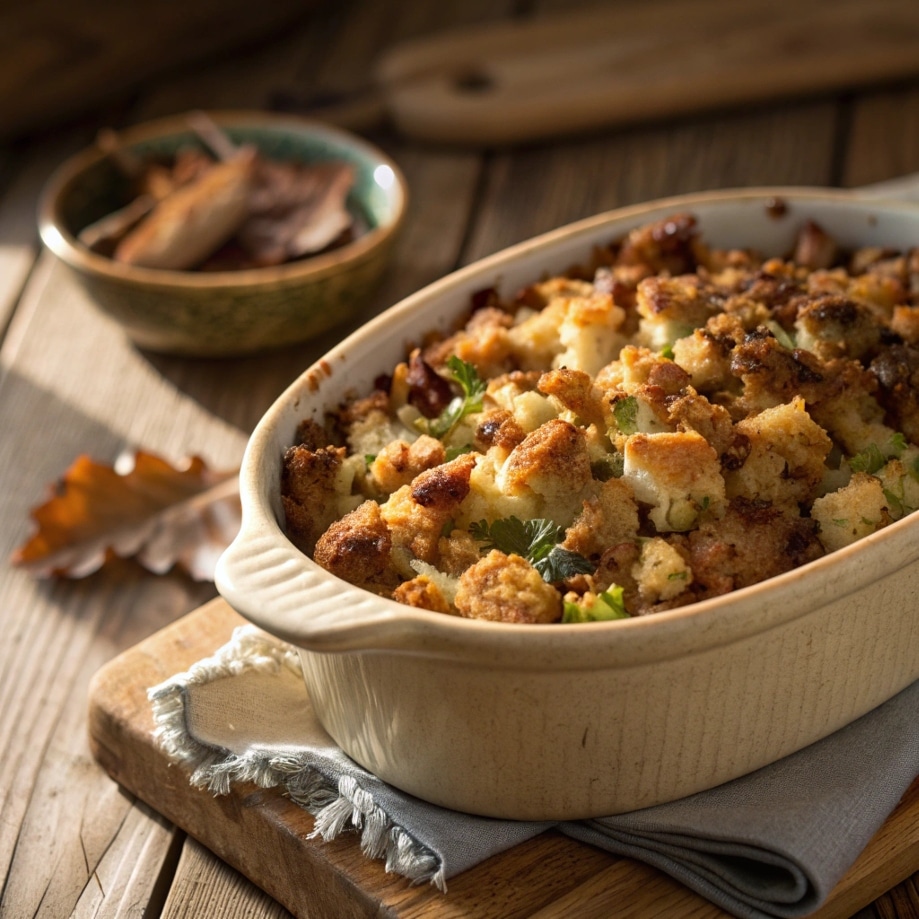
Classic Herb Stuffing
Equipment
- Skillet
- Baking Dish
- Mixing bowl
Ingredients
Stuffing Base
- 12 cups bread cubes (day old or lightly toasted)
- 1 cup unsalted butter
- 2 cups yellow onion (finely diced)
- 2 cups celery (finely diced)
- 1 cup carrot (finely diced)
- 2 tbsp fresh sage (or 2 tsp dried)
- 1 tbsp fresh thyme (or 1 tsp dried)
- 1 tsp fresh rosemary (or 1/2 tsp dried)
- 1 tsp kosher salt (plus more to taste)
- 1 tsp freshly ground black pepper
- 3 to 4 cups chicken or vegetable broth (warm)
- 2 large eggs (lightly beaten, optional)
- 2 tbsp fresh parsley (chopped, for finishing)
Instructions
- Preheat oven to 175°C. Butter a deep 9×13 inch baking dish.
- Toast bread cubes on a sheet pan for 8–10 minutes if not already dry. Cool slightly and place in a large bowl.
- Melt butter in a large skillet over medium heat. Add onion, celery, and carrot. Cook until tender, about 10 minutes. Stir in sage, thyme, rosemary, salt, and pepper. Cook one more minute.
- Transfer vegetable mixture to bread cubes and toss gently to combine.
- Add warm broth a cup at a time, tossing gently. Stop when mixture feels moist and holds together when pressed. Stir in eggs if using.
- Transfer to baking dish. Cover with foil and bake for 30 minutes. Uncover and bake another 15–25 minutes until golden and crisp on top.
- Sprinkle chopped parsley on top before serving.
